04/09/2026 Australia – Singapore – Bangkok
Depart Singapore SQ 710, 12.50
Arrive Bangkok 14.50
Depart Bangkok TG 345, 19.50
Arrive Lahore 22.30
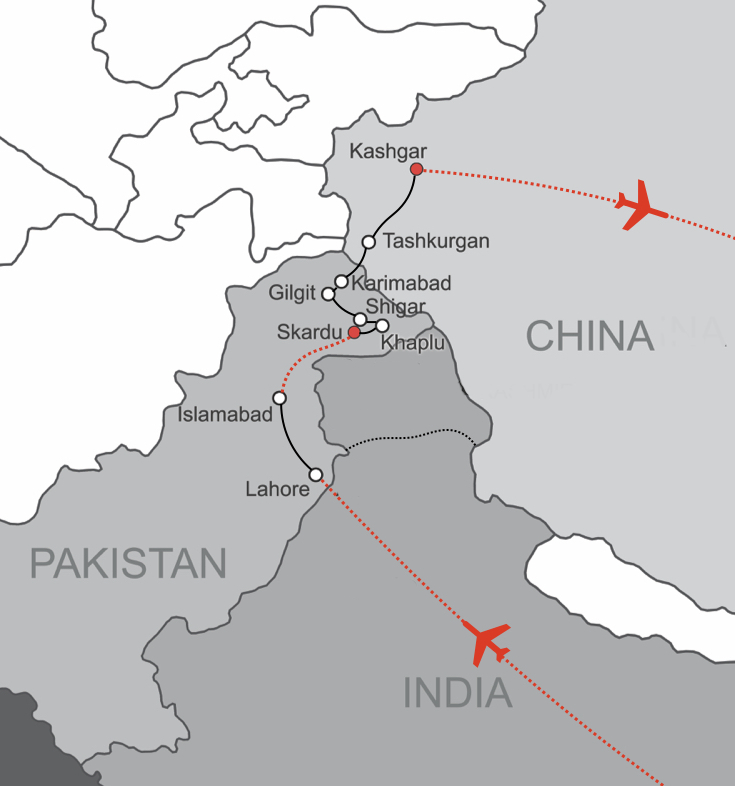
After completing Pakistan customs and immigration formalities we transfer to our hotel in Lahore, the second largest city of Pakistan. This is Pakistan’s cultural heart, and it hosts most of the arts, cuisine, festivals, music, film-making, gardening and intelligentsia of the country. Lahore is not just bricks and mortar, it is an alive, pulsating city, rich with its own flavour of colorful festivals, traditions and deeply influenced by the indomitable generous and hospitable spirit of the Lahoris.
Nishat Hotel
Lahore
05/09/2026 Lahore (BLD)
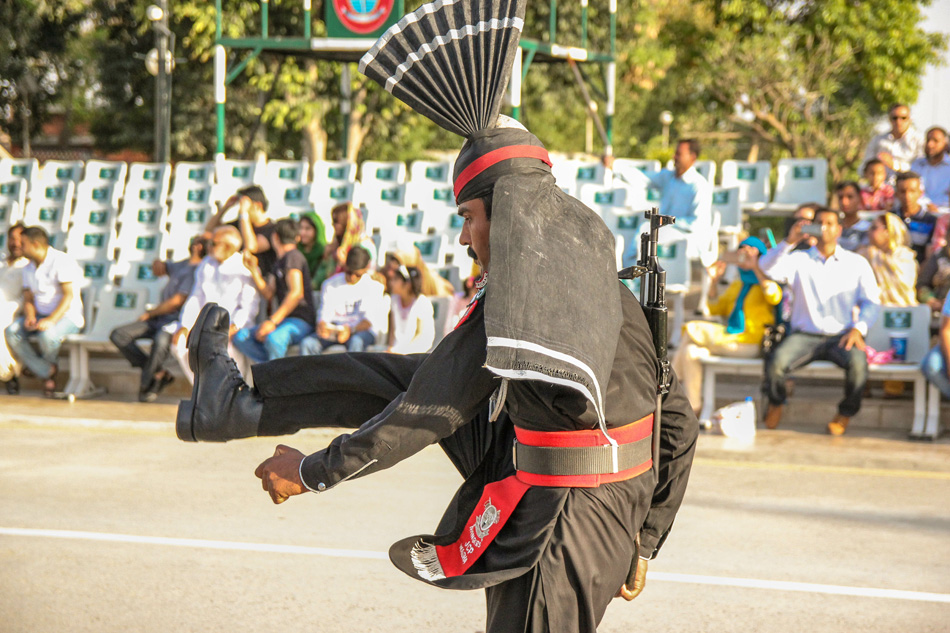
In the morning we visit Hiran Minar, meaning “The Deer Tower”, which was built by Mughal Emperor Jahangir in the early 17th century, surrounded by serene water and lush greenery, it offers a perfect blend of Mughal elegance and tranquil natural beauty. In the afternoon we head to the border at Wagah to witness an elaborate ceremony at the border. A military practice, it has been performed by both Pakistan and India at the same time since 1959. The cheering crowd and the meticulous drill on both sides make for a unique experience.
06/09/2026 Lahore (BLD)
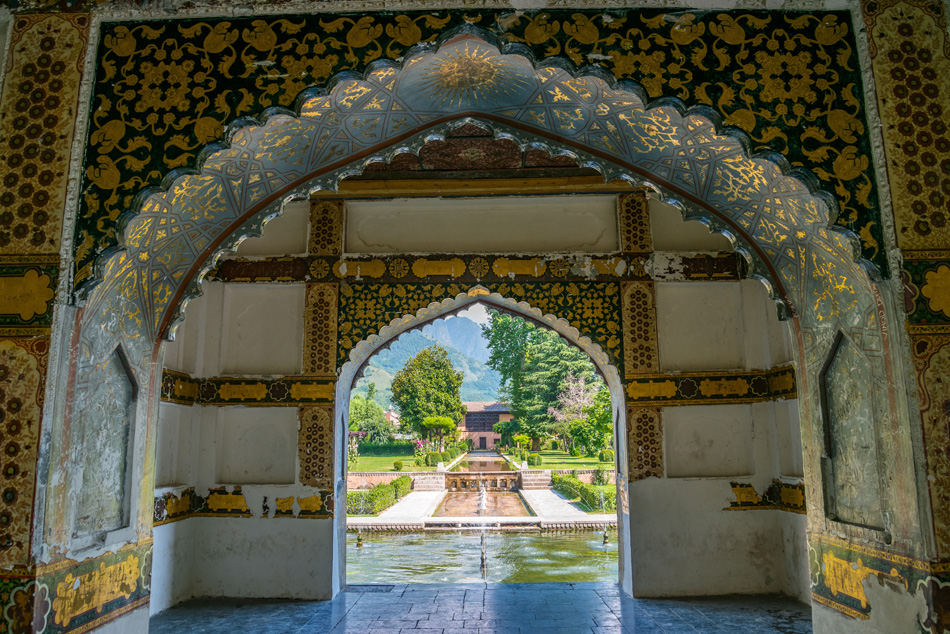
This morning we explore the Shalimar Gardens, an astonishing garden complex that dates from the Mughal Empire. Construction of this Persian paradise garden began in 1641 during the reign of Shah Jahan, it represents a heaven on earth in which human’s co-exist in harmony with nature. This afternoon we visit Jahangir’s tomb – the 17th-century mausoleum built for the Mughal Emperor Jahangir. The site is famous for its interiors that are extensively embellished with frescoes and marble, and its exterior that is richly decorated with colourful mosaics. The tomb, along with the adjacent Akbari Sarai and the Tomb of Asif Khan, are part of an ensemble currently on the tentative list for UNESCO World Heritage status.
07/09/2026 Lahore (BLD)
In a dizzying day of exploration, we start with a visit to The Lahore Fort, a wonderful and one-of-a-kind Mughal structure. This historical palace was built by the legendary Mahmood of Ghazni in the 11th century. The massive compound is astonishing and is made up of different gardens, palaces, halls, mosques and the impossibly beautiful Palace of Mirrors. After our visit here we visit Delhi Gate one of the six remaining historic gates of Lahore city.
08/09/2026 Lahore – Islamabad (BLD)
After an early breakfast we board our coach for the drive to the capital of the Islamic Republic of Pakistan, Islamabad. Islamabad was built between 1960 and 1970 to replace Karachi as the capital. The idea of the national capital of Islamabad was conceived by President Ayub Khan (1907–1974) and it was designed to be the greenest city in Pakistan. After checking in to our hotel in the late afternoon, we will discover some of the sights of Islamabad.
Serena Islamabad Hotel
Islamabad
09/09/2026 Islamabad – Skardu (BLD)
After breakfast we transfer to the airport for our flight to Skardu.
Depart Islamabad Pakistan Airlines PK 451, 10.00
Arrive Skardu 11.00
A scenic flight takes us over the spectacular Himalayan mountain ranges to Skardu. On arrival we will visit Kachura, a picturesque lake before checking into our hotel, surrounded by breathtaking views of the Karakoram range.
Shangri-la Resort Skardu
Skardu
10/09/2026 Skardu – Khaplu (BLD)
Today we take in spectacular scenery following the Indus & Shyok Rivers flanked by the Karakoram and Himalayan ranges. We pass the cold desert, subalpine conifer forest and orchards enroute to Khaplu.
Serena Khaplu Palace
Khaplu
11/09/2026 Khaplu – Machulu – Khaplu (BLD)
Khaplu, also known as ‘Little Tibet’ stretches 112 kilometres along the River Shyok, a tributary of the River Indus, next to the ancient trade route to Ladakh. It is a place of remarkable lakes and hiking trails, and is the gateway to Hushe valley, home to several magnificent peaks and glaciers. This morning we drive to the pristine villages of Saling and Machulu where we can see the magnificent Mashabrum Mountain, and its beautiful surrounds.
12/09/2026 Khaplu – Shigar (BLD)
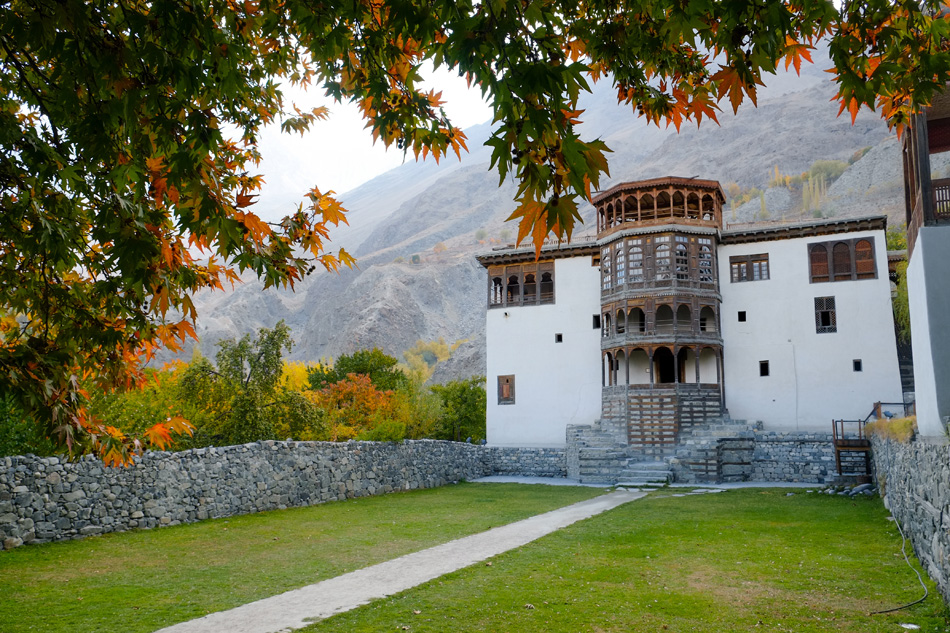
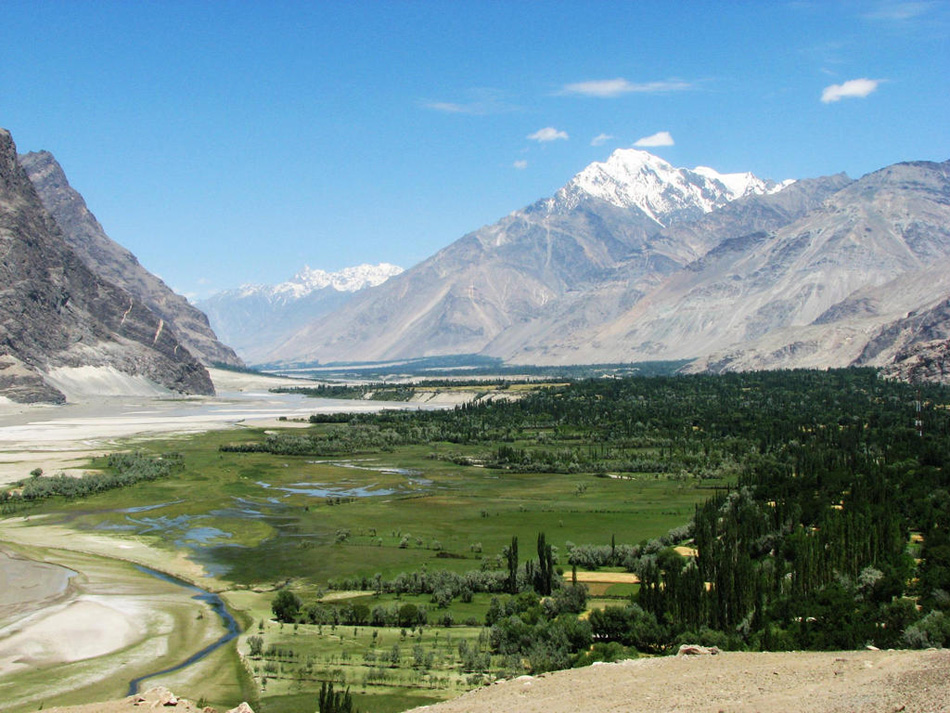
Today we head for the immense valley of Shigar via the Safaranga, or Cold Desert. Located at an altitude of 2,226 meters, the Safaranga Desert is one of the world’s highest cold deserts. Crossing the bridge over River Shigar we enter perhaps one of the most beautiful places on earth, the Shigar Valley. The legendary history of this valley, its architectural heritage, and the simplicity and purity of the people, make it a focal point of Pakistan’s natural treasure. Shigar Valley is a blend of verdant oasis, glaciers, majestic mountains, lakes, and hot springs. The Shigar Fort, one of the heritage sites, was built in the early 17th-century on the banks of the Shigar River by Raja Hassan Khan, the 20th Raja of Amacha Dynasty. Standing among the world’s most astounding mountain ranges, at a height of 2,250m above sea level, the fort – which is now run by Serena Hotels – truly reflects the diversity of nature and the legendary history of the Shigar region. The fort harmoniously blends with its surroundings as the design and construction techniques used by Kashmiri masons, artisans and goldsmiths have endowed it with a unique architectural status.
Serena Shigar Fort Residence
Shigar
13/09/2026 Shigar (BLD)
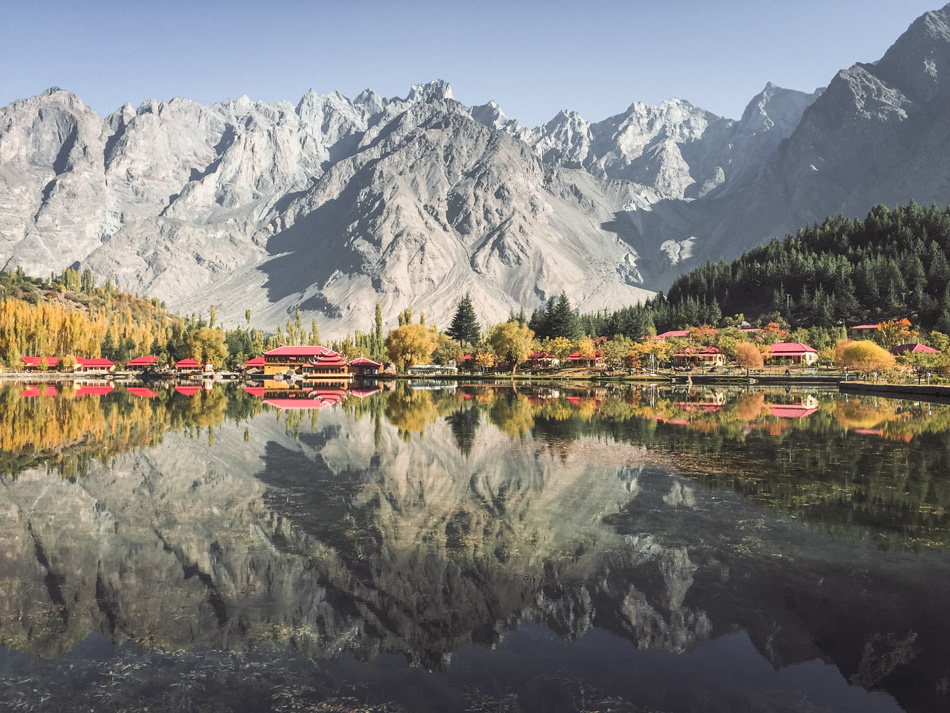
The exquisite landscape of Shigar Valley is punctuated by startling ancient architectural ornaments. The historical 17th-century Fong-Khar Fort of Shigar, 16th-century Khanqa-e-Muallah, and the 14th-century Amburiq Mosque unveil the architectural treasures and legendary history of the Shigar valley. Today we continue to explore the valley.
14/09/2026 Shigar – Gilgit (BLD)
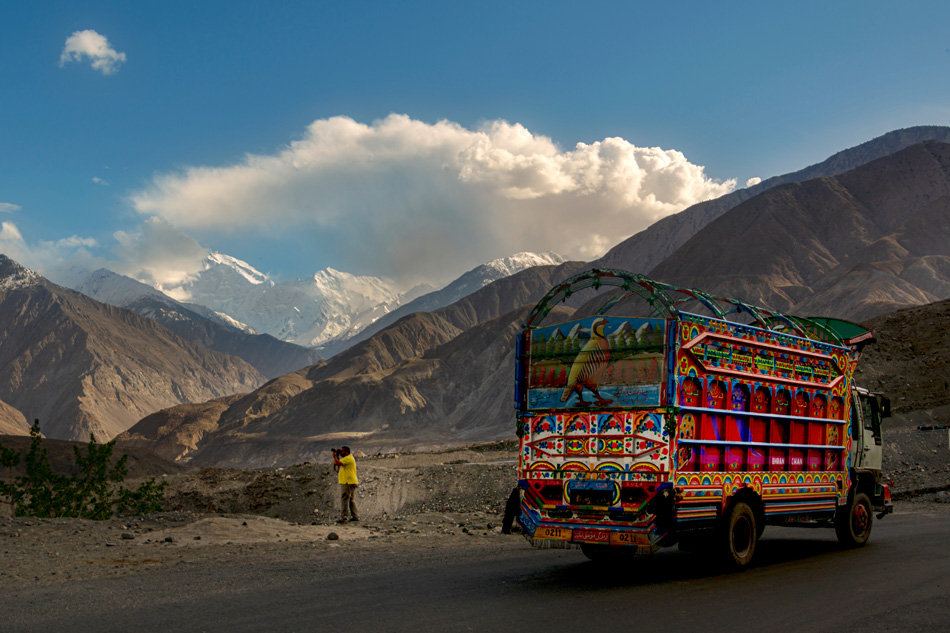
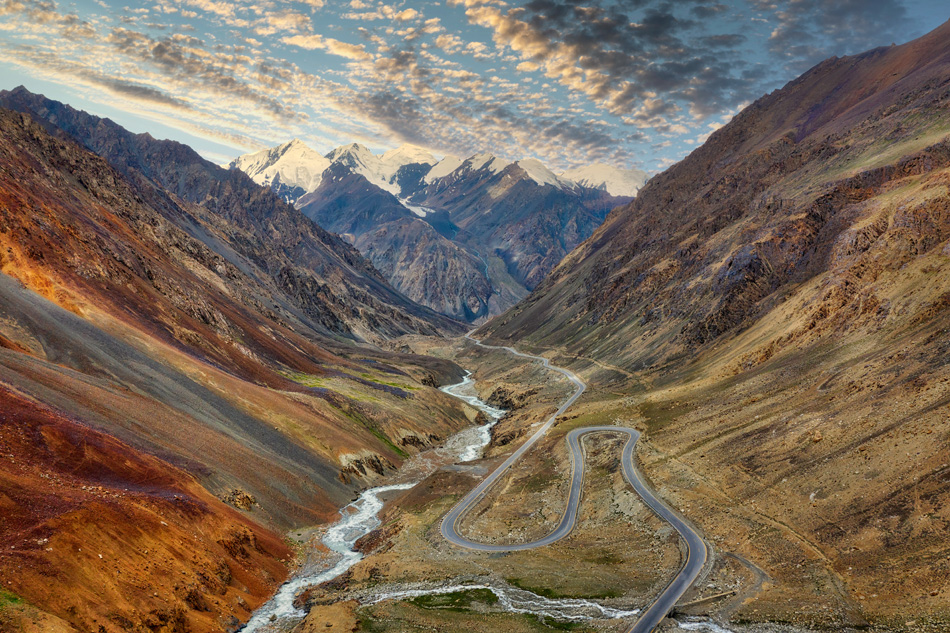
This morning we drive to Gilgit via the spectacular Strategic Highway No 1. The road skirts the Indus River and enters the Karakoram highway before Gilgit. The highway is full of glorious twists and turns and in 2021 was widened and fully asphalted in a project that took four years to complete. It was inaugurated with great pomp and ceremony by then Prime Minister Imran Khan. Just before we arrive into Gilgit we make a stop to see the exact point where the three mighty mountain ranges of the Karakoram, Himalaya and Hindu Kush meet – a stunning view from any perspective.
Serena Gilgit Hotel
Gilgit
15/09/2026 Gilgit – Karimabad (BLD)
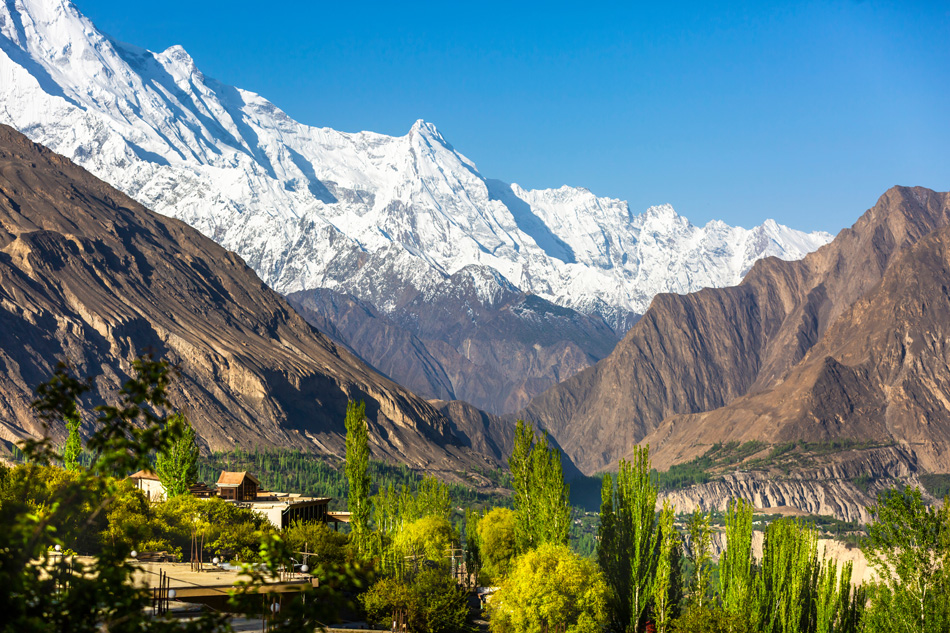
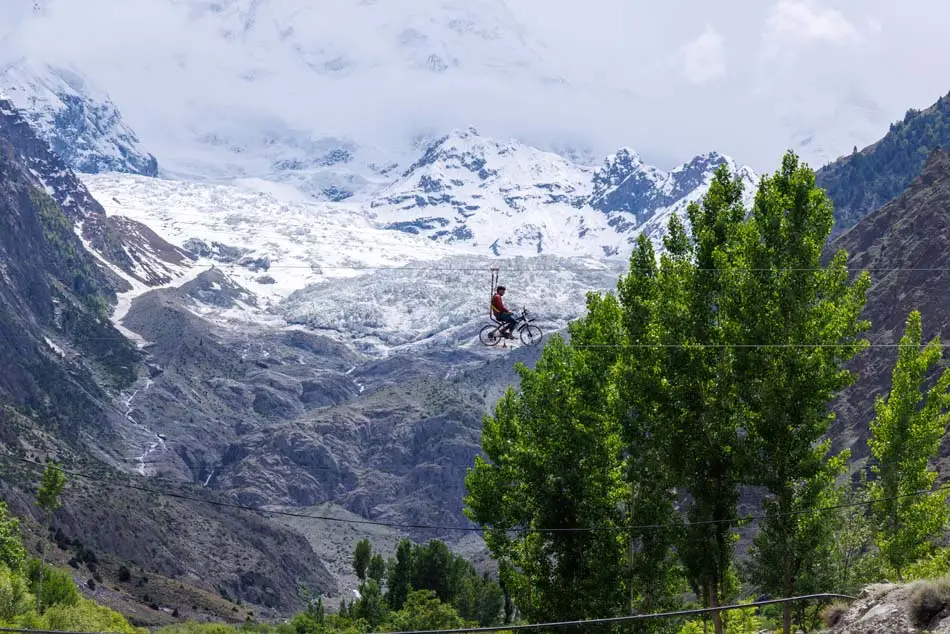
Our journey today takes us through the Hunza Valley and onto the great Karakoram Highway, past the ancient remains of the Silk Road. We stop for lunch in the Nagar Valley where we see the beautiful Rakaposhi Mountain (7,788m). We then continue onto the town of Karimabad and, after a stroll through the atmospheric Altit Village, we check into our fort hotel. Late afternoon we take the steep drive to Eagles Nest to witness an amazing sunset view of the entire lower Hunza and Nagar valleys.
Serena Altit Fort Residence
Karimabad
16/09/2026 Karimabad (BLD)
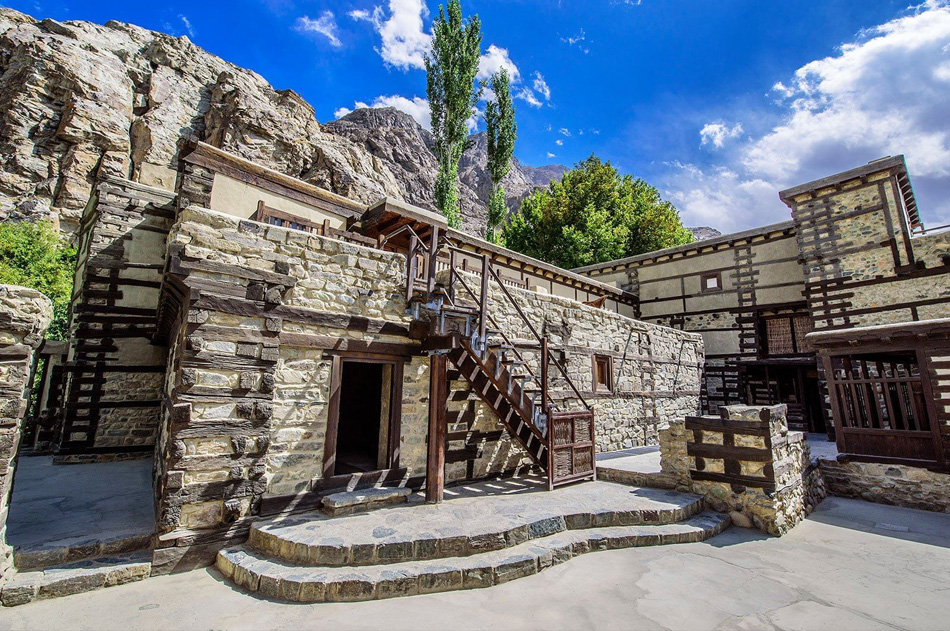
Situated on the west bank of the Hunza River, Karimabad is named after Prince Karim Aga Khan, the spiritual head of the Shia Ismaili Nizari community, and it is rich in cultural and historical heritage. This is an area of immense natural beauty and roses, pansies, lilies, zinnias, and cosmos grow wild in the area, alongside willow, fir, and poplar trees. This morning we visit the Baltit Fort – former residence of the Hunza Royal Family. The ancient architecture resembles that of the Potala Palace in Lhasa, and it was designated a UNESCO World Heritage Site in 2004. Late morning we drive to the nearby Hoper Valley. Here a cluster of villages are set in a natural bowl at the bend of a glacier, with three sides of the valley covered by Hoper glacier. The glacier forms the base of the Bawalter peak and is one of the fastest moving glaciers in the world, and without doubt, one of the most beautiful places on earth!
17/09/2026 Karimabad – Sost (BLD)
This morning we continue our drive along the Karakoram Highway to Sost, making a brief stop at Attabad Lake before continuing towards Gulmit to explore the village and local handicraft centres. After lunch we pass through breathtaking landscapes featuring the iconic Passu Cones and the Khunjerab National Park.
Serena Sost Hotel
Sost
18/09/2026 Sost – Tashkurgan (BLD)
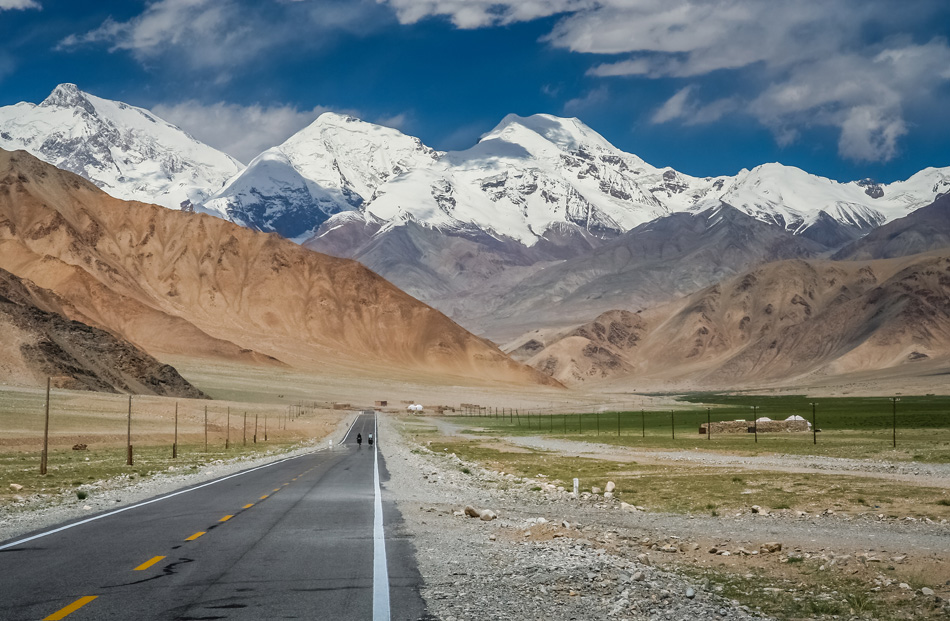
This morning we drive to the Pakistan/Chinese border at Sost on the Khunjerab Pass. The view from the top of the pass into Tajikistan – 20 Kilometres away – is breathtaking. At 4,693 meters, it is the world’s highest border crossing, and after completing Pakistani and Chinese immigration we descent nearly 2,000 metres into the Tajik Autonomous region and onto the Chinese town of Tashkurgan. This is the eastern Pamir Plateau convergence point of the Kunlun, Karakoram, Hindu Kush and the Tian Shan Mountain ranges.
Ghogori Hotel
Tashkurgan
19/09/2026 Tashkurgan – Kashgar (BLD)
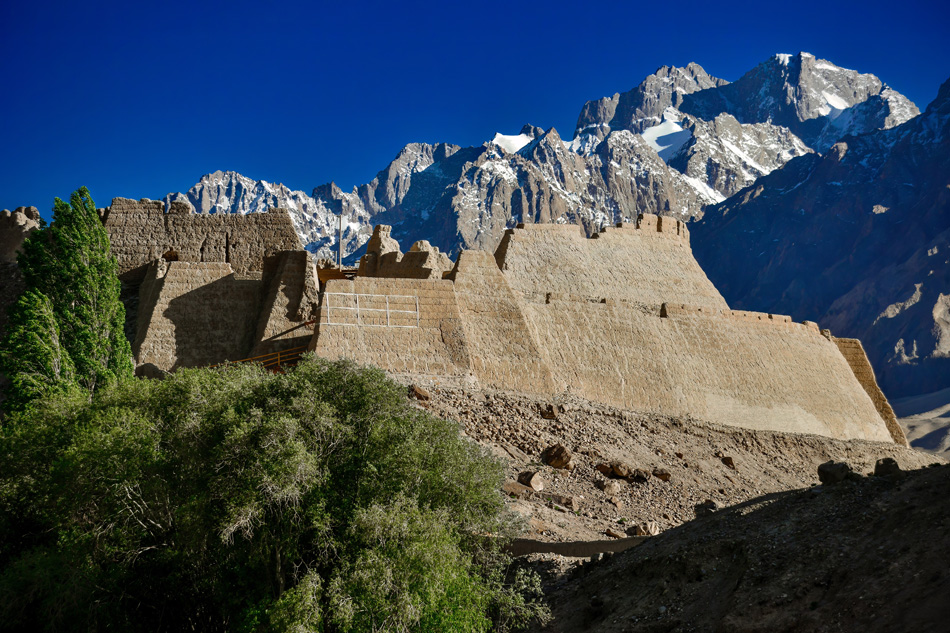
Tashkurgan dates back almost 2,000 years and is located along the main branch of the Old Silk Road leading from China into Western Asia. We visit the Stone City that overlooks the town, which was once the seat of the Tajik Kingdom and guarded the camel caravans along the Silk Road for centuries. It is believed that this is the midway point between Europe and China. We then head towards Lake Karakul through grasslands and mountains. As we descend, clear streams and warm shifting colours of the grasslands against the dark mountains provide a wonderful vista. Soon we reach the dazzling alpine lake of Karakul, the highest on the Pamir Plateau. It is surrounded by the snow-covered mountains of Muztagh (7,546m) and Gonger Tagh (7,719m): this is the Karakoram Highway at its most spectacular! Passing the surreal white sands of Bulongkol Lake we descend into Kashgar.
Radisson Blu Hotel
Kashgar
20/09/2026 Kashgar (BLD)
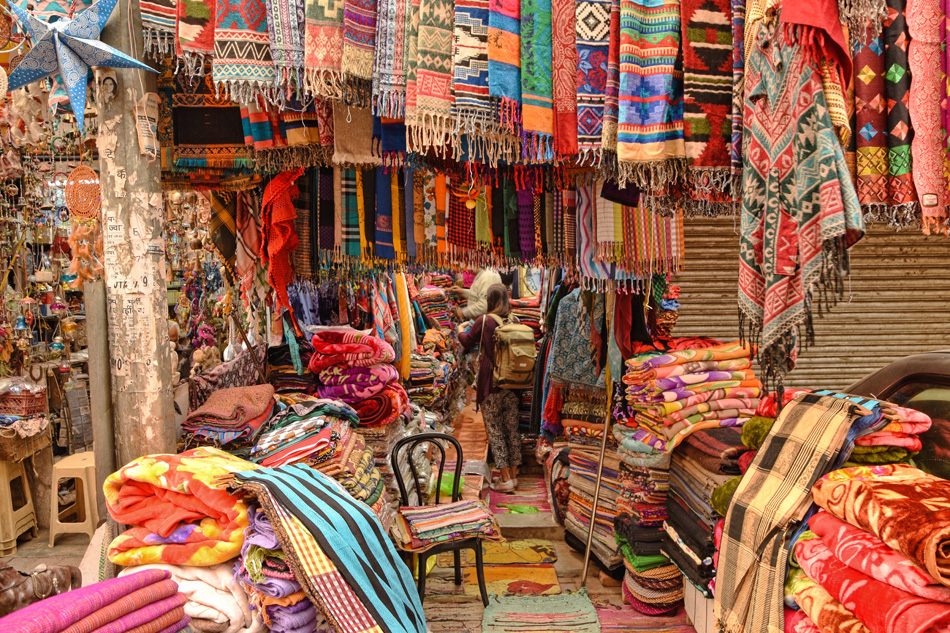
On Sundays Kashgar’s population swells by 90,000 people as hordes of Uighur, Afghan, Mongol, Pakistani and Dungan – all in traditional clothes – descend on a bazaar and livestock market that is still doing business after more than 2,000 years of operation. Riding donkeys or driving carts, farmers from surrounding areas hurry to the bazaar early in the morning. Commotion and chaos are interspersed by chatter and laughter – little has changed after centuries as this kaleidoscope of humanity rolls on. The livestock market and the bazaar simply form one of the most engaging spectacles in the world.
21/09/2026 Kashgar (BLD)
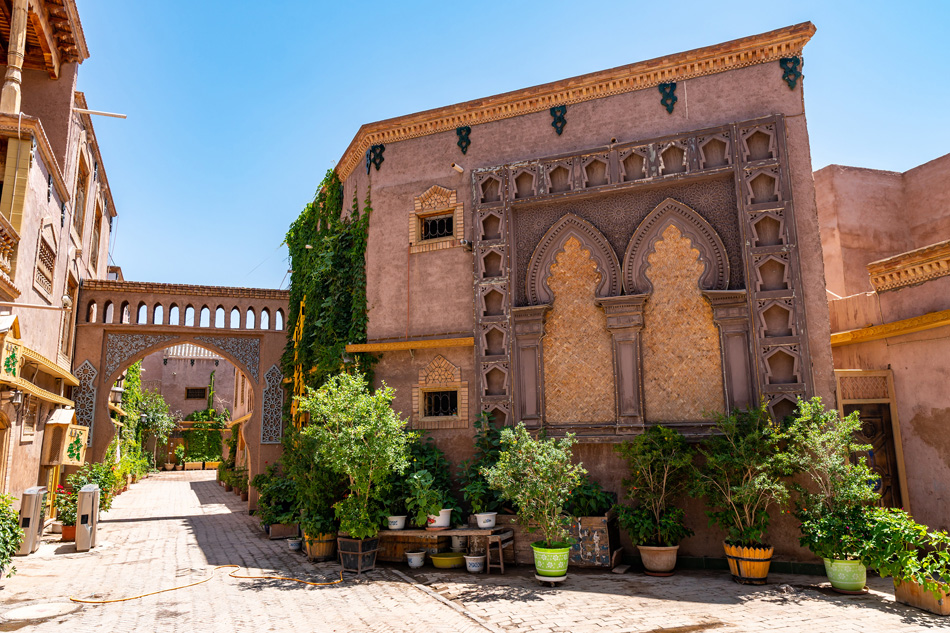
Kashgar is situated at the western end of the Tarim Basin in a fertile oasis on the Kashgar River. Kashi, as it is officially known, has more of a Central Asian vibe – not unlike Samarkand – with a population made up of Uighur, Turkic and Muslim. It is surrounded by the formidable Tian Shan Mountains, the Pamir range and the vast Taklamakan Desert. For two millennia, Kashgar was the greatest market city on one of the major trade routes of ancient times. Caravans of a thousand camels each travelled along it, transporting silk, spices, gold and gemstones between Istanbul and the central Chinese city of Xian, then the capital. In the mid-19th century, Kashgar again became prominent when Britain and Russia struggled for influence over Central Asia in the intrigues and espionage known as the ‘Great Game’. The British set up a consulate in a Kashgar villa known as Chini Bagh, while the Russians set up their consulate nearby in what is now the Siman Hotel. We spend a full day unearthing the city’s myriad secrets and puzzles.
22/09/2026 Kashgar – Beijing (BD)
After breakfast we transfer to the airport for our flight to Beijing.
Depart Kashgar Air China CA 9666, 18.00
Arrive Beijing 23.00
On arrival in Beijing we transfer to our hotel.
Cordis Beijing Capital Airport Hotel
Beijing
23/09/2026 (B)
This morning is at leisure. Later we transfer to the airport for our flight home.
Depart Beijing Singapore Airlines SQ 807, 16.35
Arrive Singapore 22.50
On arrival in Singapore, we connect with the flight to our chosen Australian capital city.
24/09/2026 In Flight
We arrive home in Australia today.